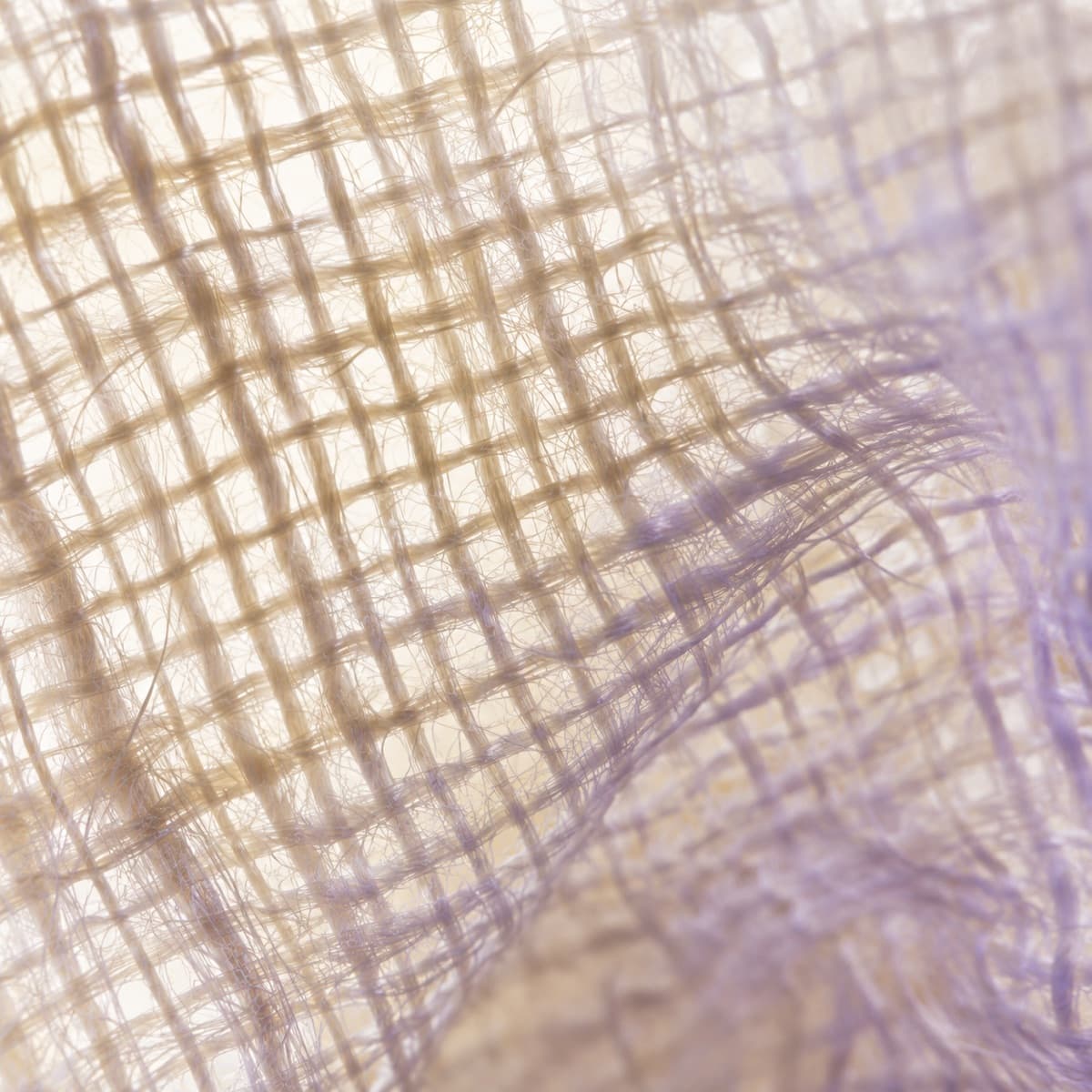
Abaca sinamay
An open woven grid stiffened with sizing. Light passes through it, which is why it photographs as texture rather than as a flat colour. Reads as daytime almost anywhere.
Guide three
Six materials do nearly all the work in this category. Knowing how each one handles light explains most of the conventions people find arbitrary.
An open woven grid stiffened with sizing. Light passes through it, which is why it photographs as texture rather than as a flat colour. Reads as daytime almost anywhere.
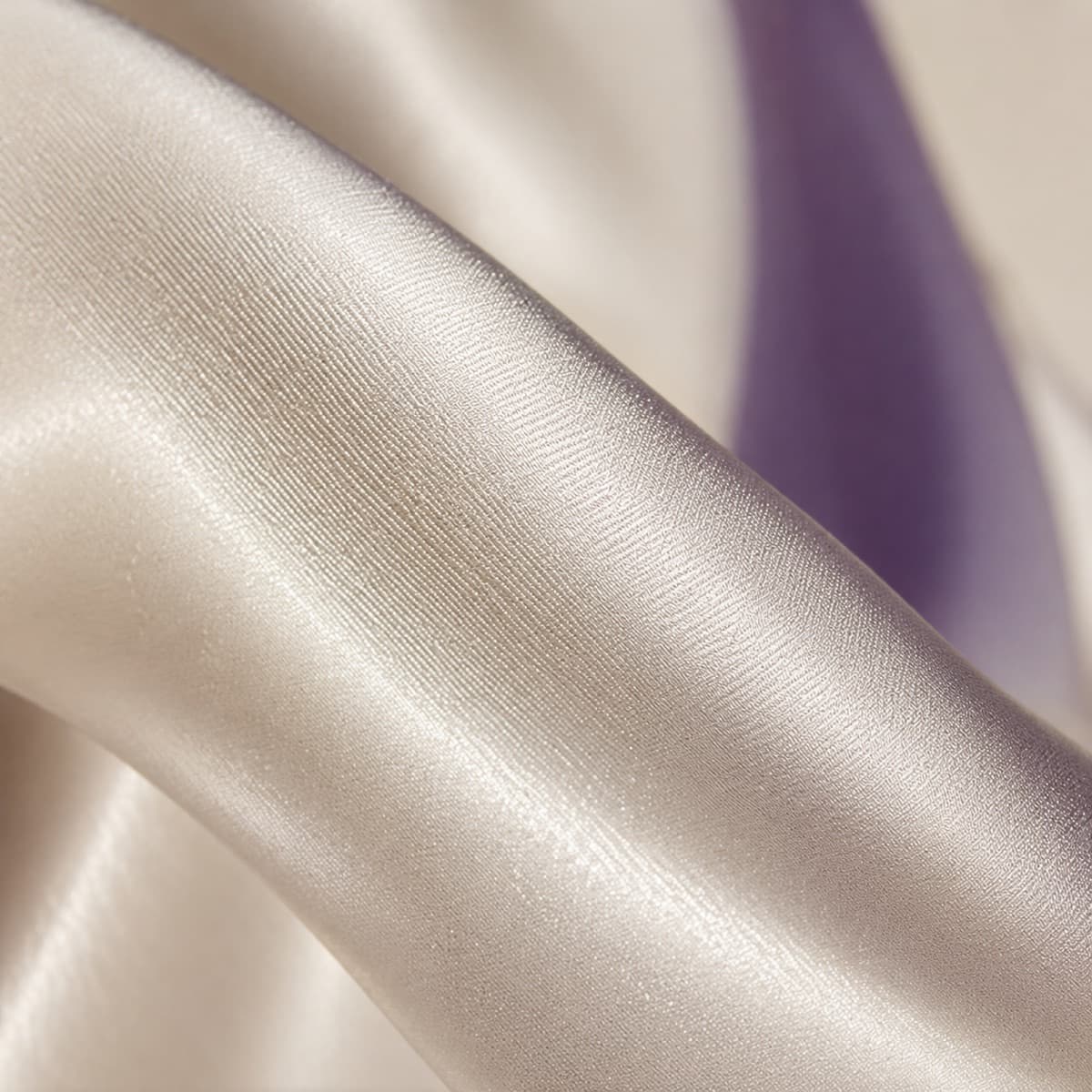
A closed weave with a directional sheen. It returns light as a broad band rather than a texture, which is why it reads as an evening material and can look heavy at noon.
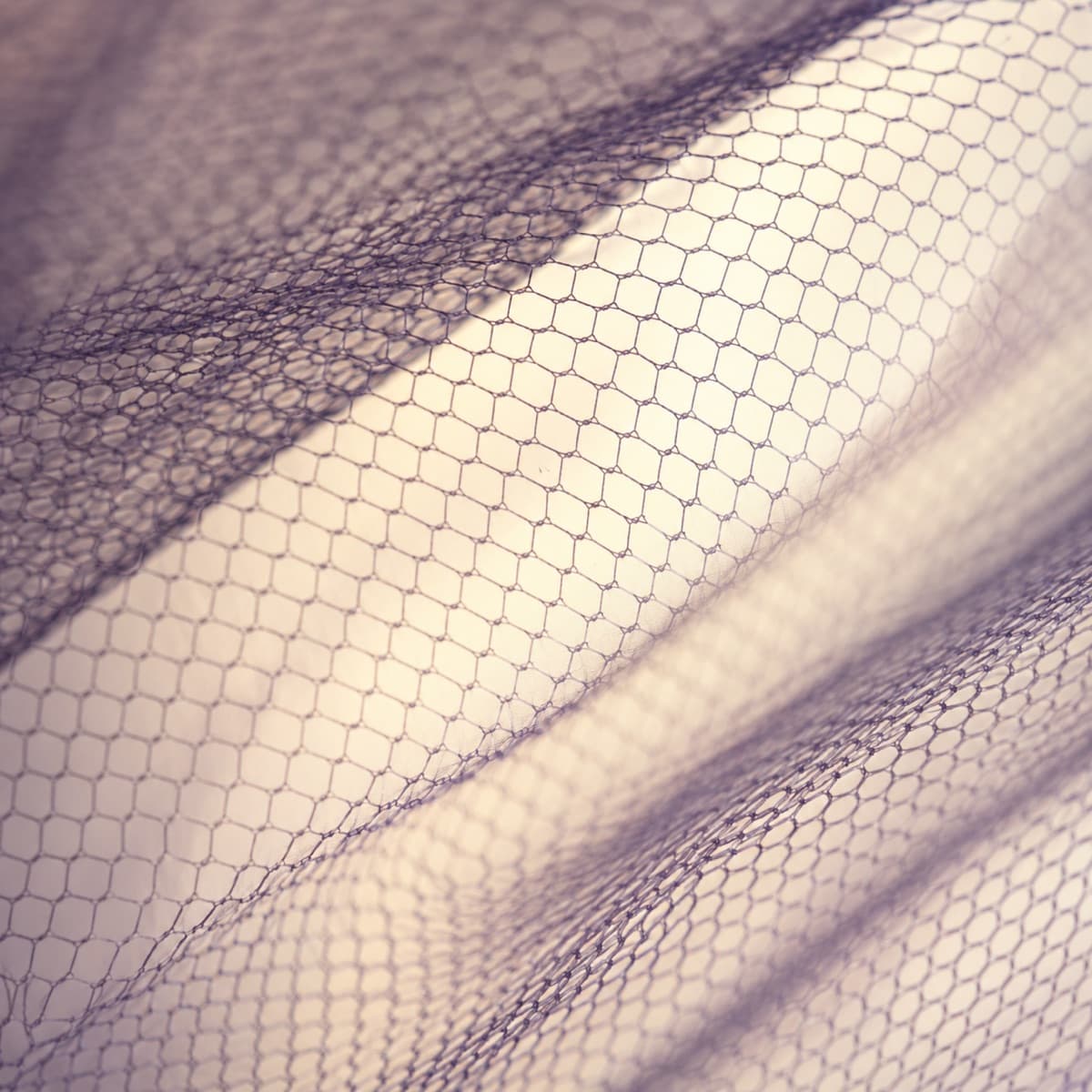
Fine polyamide mesh. Layered, it produces visible depth and a soft moiré under raking light — the reason a small veiled piece photographs as more formal than its size suggests.
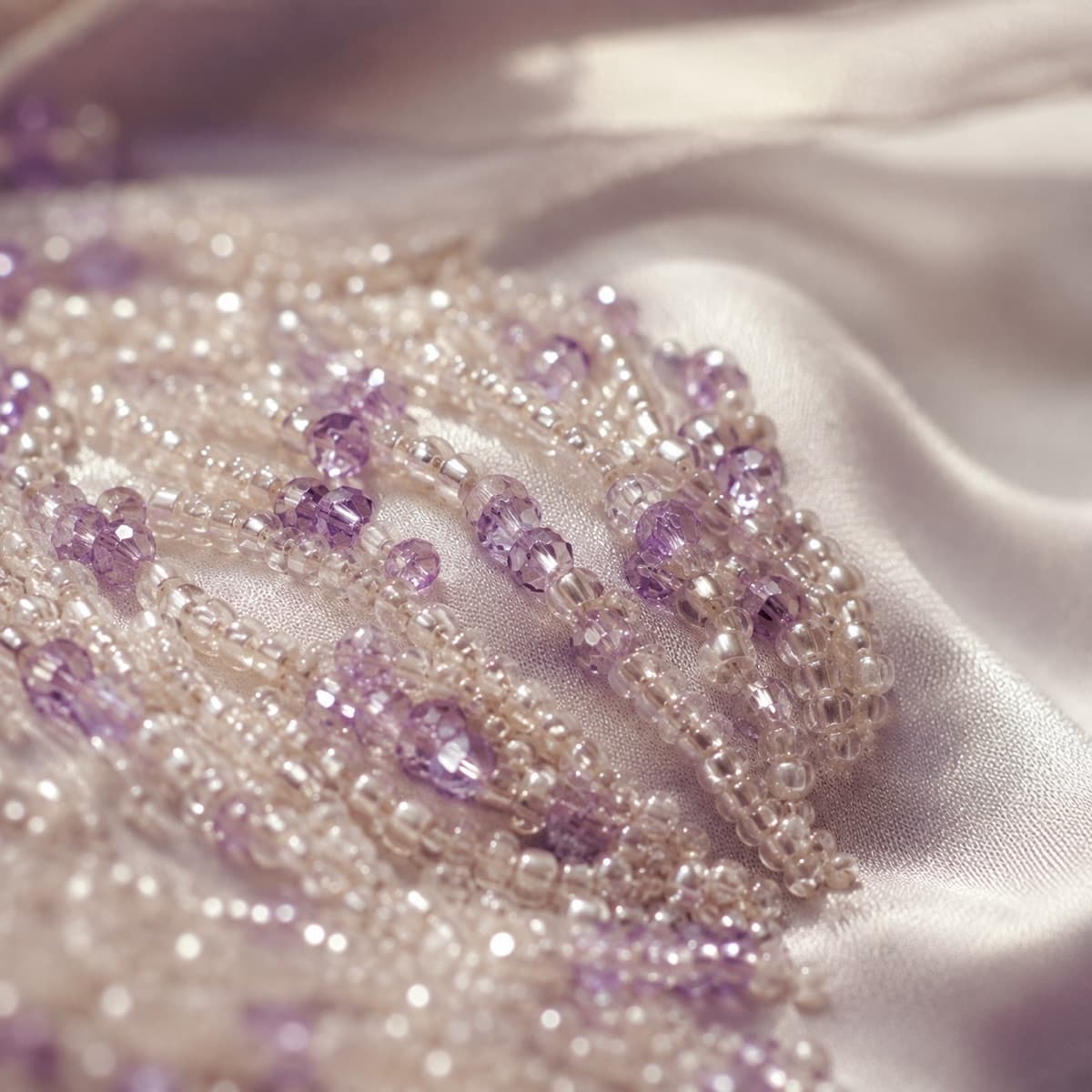
Returns light in points rather than sheets, which is what holds up under the mixed lighting of an evening room. It also adds real weight: beading is the difference between a 60 g piece and a 92 g one.
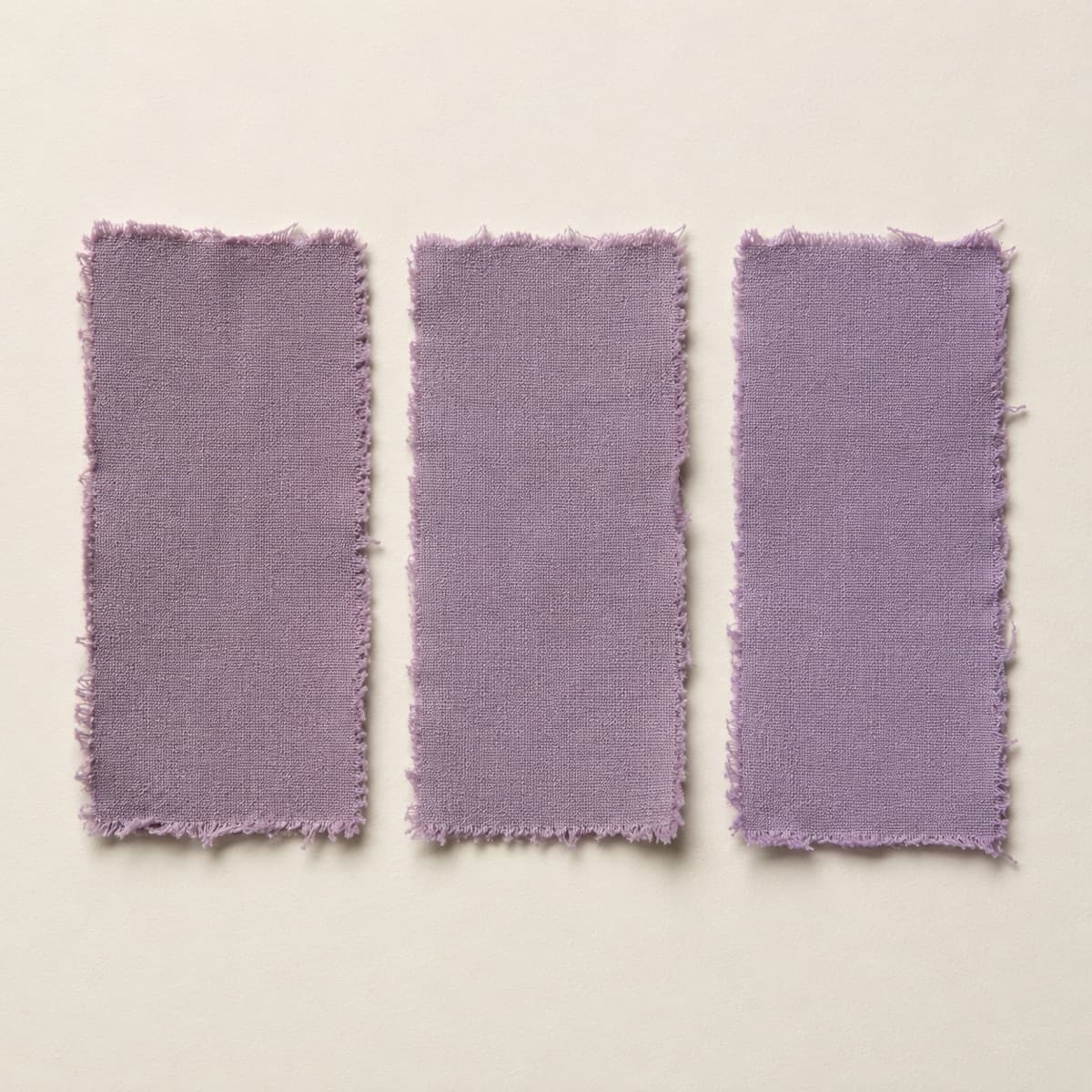
Colour is applied in small lots. Shade shifts slightly between lots and against a screen. It is a property of the material, disclosed on every product page rather than argued about afterwards.
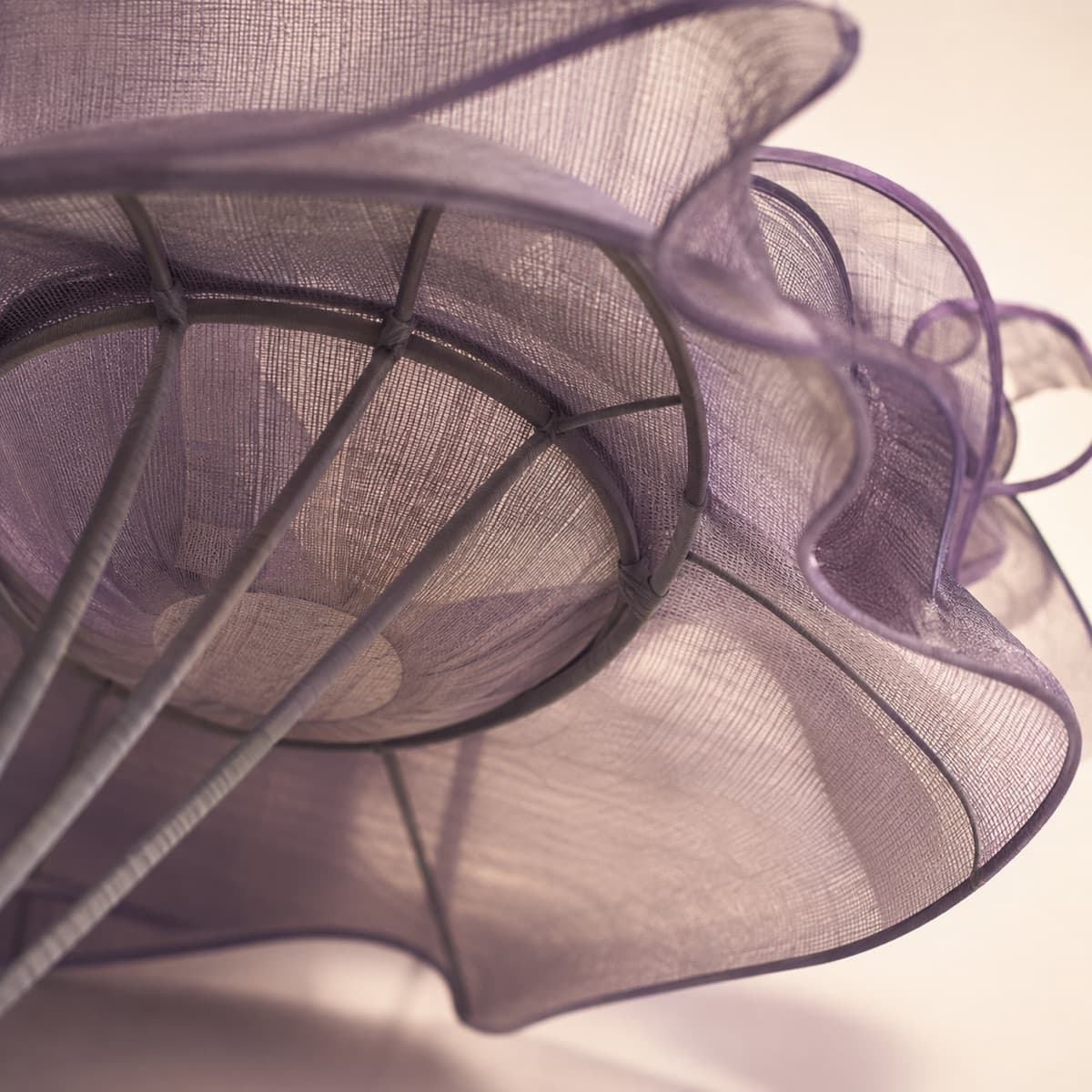
The armature under the surface. It is what holds a brim level and a sculpted form upright, and it is the part that fails first if a piece is crushed.
Nothing on this site is offered as protection against sunlight or ultraviolet radiation. A hat marketed that way becomes regulated personal protective equipment in the European Union, with conformity assessment and CE marking behind it. We describe brim width, weave and shape, and we leave it there.
Full material and feather disclosure